
A detailed content explaining the long-term benefits of using anti-hail systems in fruit growing.
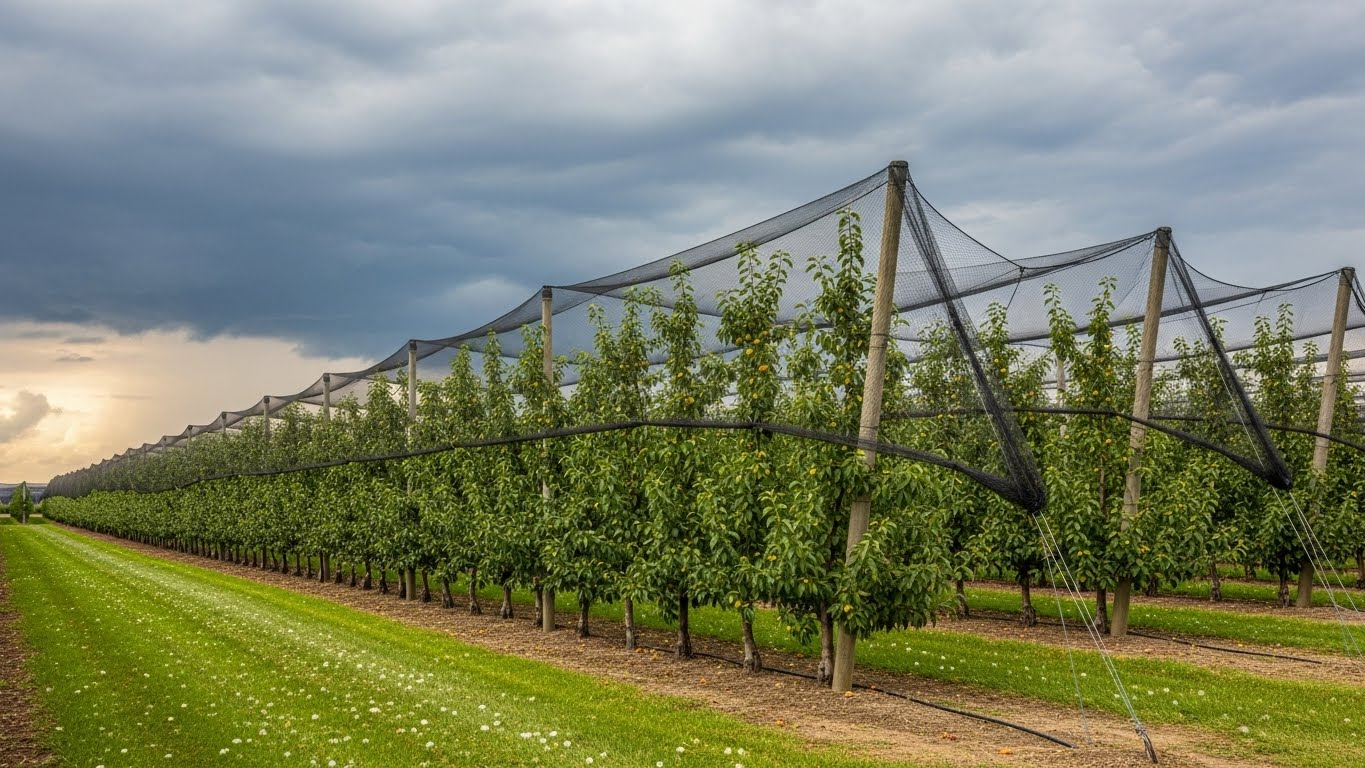
In modern fruit growing, risk management plays a crucial role in maintaining quality and productivity. Hail is one of the most significant and destructive natural threats in agricultural production. Many growers fully understand the enormous difference between pre-hail and post-hail conditions only after experiencing such an event. For this reason, anti-hail systems have become one of the essential infrastructure investments for today’s orchards. These systems not only prevent hail damage but also create a microclimate, improve product uniformity and help growers become more competitive in global markets.
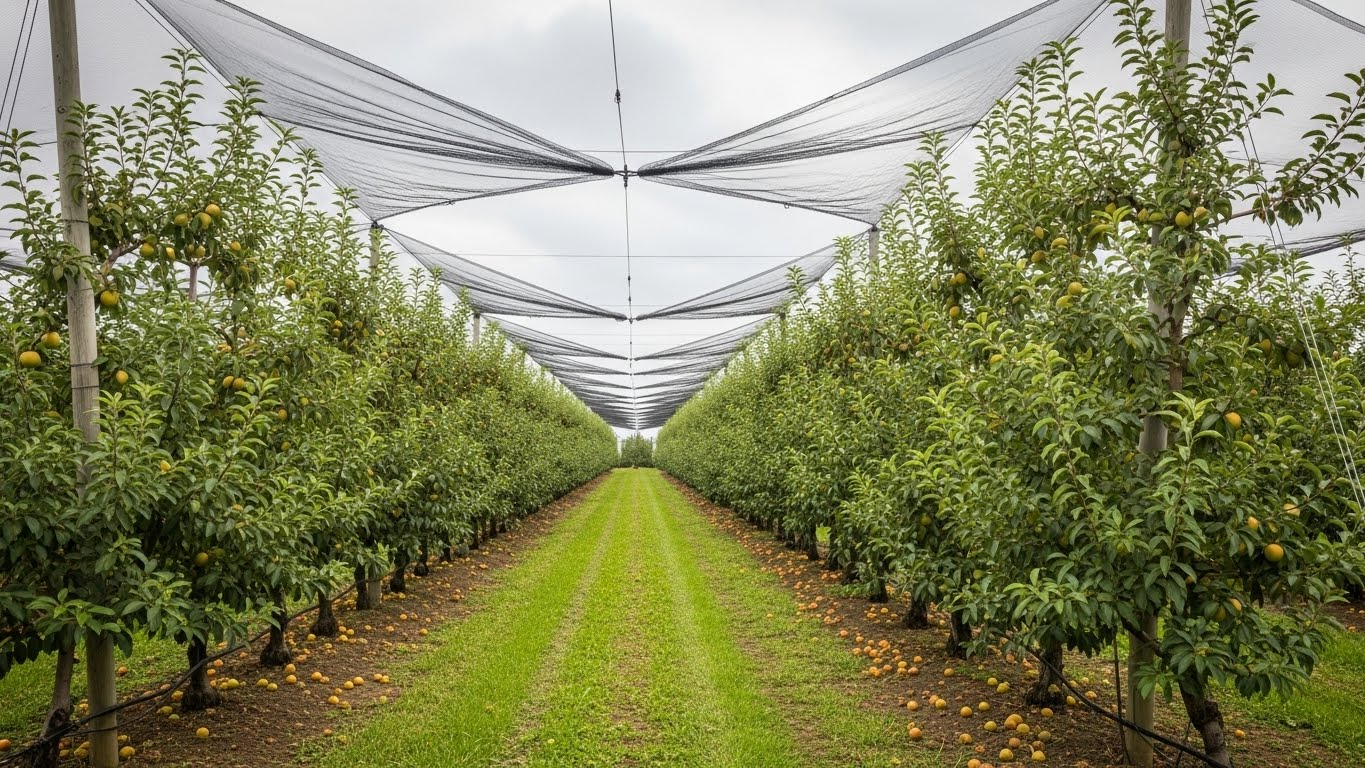
One of the most important advantages of anti-hail systems is the preservation of fruit quality. Fruits exposed to hail develop surface deformities, making them unsuitable for classification as first-grade produce. For growers engaged in export, surface quality is a critical criterion. A single hailstorm can dramatically reduce the market value of hundreds of tons of fruit. Fruits grown under an anti-hail net, however, maintain homogeneous quality, their surface remains intact, and sorting costs decrease. As a result, the grower’s income increases directly at the end of the season.
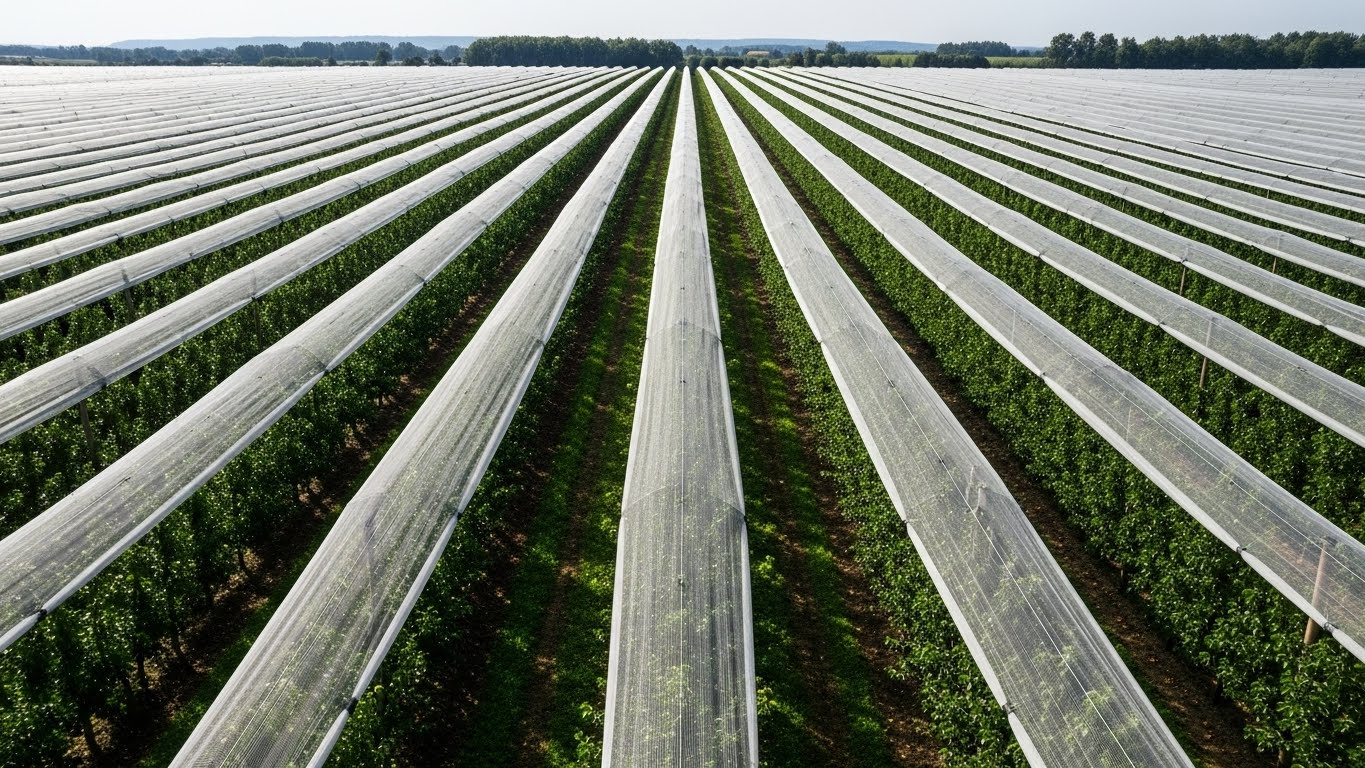
Another major advantage is the prevention of sunburn. Especially in hot regions, light-colored Reba Diamond nets refract sunlight and provide more homogeneous illumination. This prevents fruits from overheating and developing burn marks on their skin. This feature is particularly important for sensitive crops such as cherries, apples, apricots, and grapes. Sunburn can cause annual losses comparable to hail damage. Therefore, an anti-hail net provides not only hail protection but also effective light management.
Anti-hail systems also create a more stable microclimate within the orchard. The environment under the net maintains more balanced temperature and humidity values compared to the outside. This reduces plant stress and supports healthier growth. Particularly in young orchards, it helps saplings become more resistant to intense sunlight, wind, or light hail. The reduction in physiological stress of the plants reflects positively on the yield of the following season.
Another protection provided by the nets is against wind and bird damage. Strong winds, especially before a hailstorm, can cause breakage, fruit drop, and injuries to branches. Anti-hail systems reduce wind speed, easing the load on the tree. Bird damage, especially in vineyards, can cause significant economic losses. The mesh structure prevents birds from reaching the fruit, providing growers with additional protection without the need for extra measures.
One of the most significant benefits anti-hail systems offer to growers is the return on investment. While the initial installation cost may seem high, these systems typically pay for themselves within 2–3 seasons when compared to the potential damage caused by hail. A single hail event can protect the entire orchard and accelerate the return on investment. Additionally, the increase in fruit quality allows producers to achieve higher prices in international markets.
In conclusion, in modern fruit growing, anti-hail systems are not merely a protective tool but a necessary investment for sustainable production. Reba Anti-Hail systems offer durable net structures, UV-stabilized fibers and engineering designs tailored to field conditions, providing growers with a long-lasting and reliable solution. For the grower, the most important priority is to ensure income stability and secure the future of their orchard. Anti-hail systems are the strongest key to achieving this goal.