
The working principle, engineering structure and scientific basis of anti-hail systems.
Anti-hail, also known as hail protection netting, is a modern agricultural protection technology developed to shield farmland from the physical impact of hailstorms. In recent years, due to climate change, the severity and frequency of hail events have increased, leading growers to adopt stronger and longer-lasting protection systems. Anti-hail nets are the most effective and reliable hail protection method used in agriculture. The system works on the principle of dispersing the hailstone’s energy on the net before it reaches the plant. The primary function of the net is to absorb the impact generated by the hailstone and protect the surface of the fruit and leaves from damage.
As hailstones accelerate in the atmosphere, they gain significant kinetic energy. When this energy strikes the fruit surface directly, it causes severe deformities, especially in sensitive crops such as apples, cherries, pears, and grapes. To prevent this, anti-hail nets are produced from high-density polyethylene fibers. These fibers provide high impact resistance while offering elasticity. When the hailstone lands on the net, the net stretches slightly, the kinetic energy is distributed across the fibers, and the stone is prevented from reaching the plant. Thus, the plant surface remains unharmed.
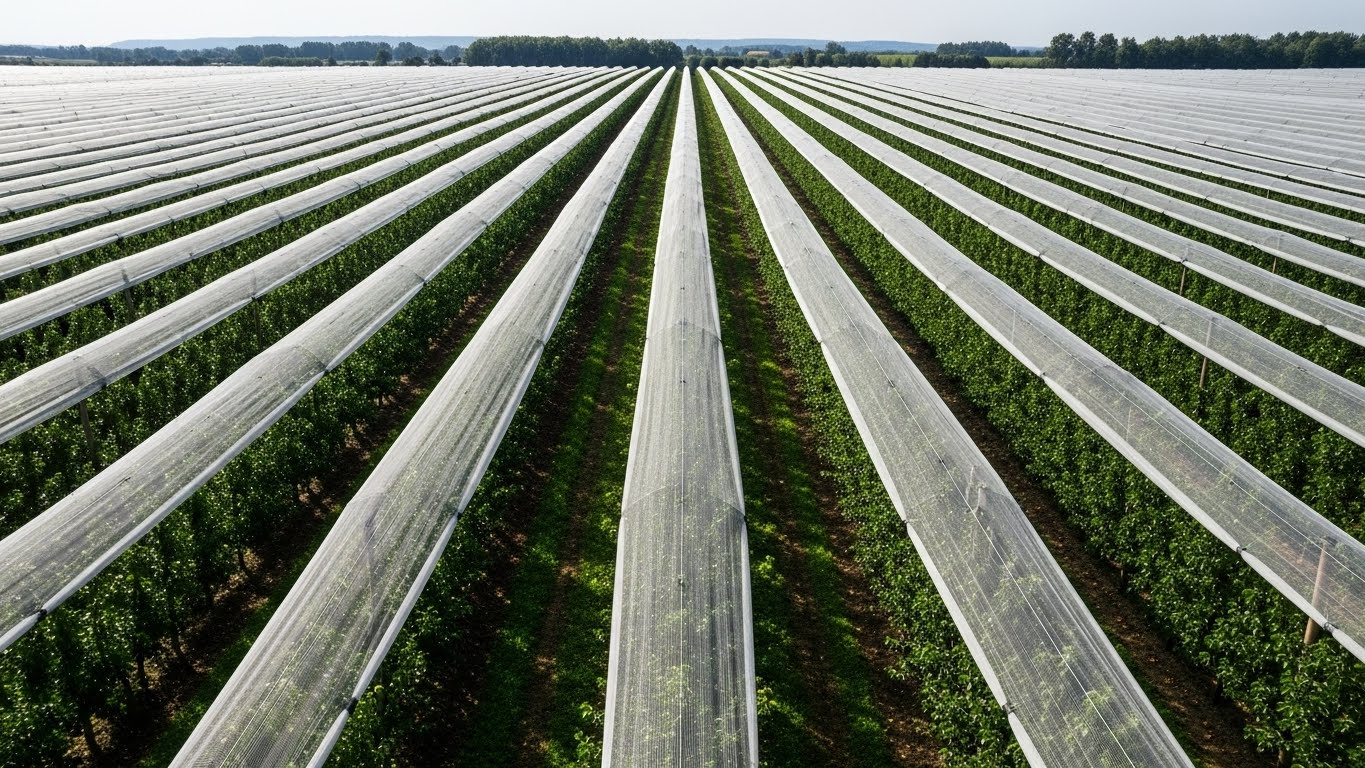
The mesh structure and cell geometry of the nets are critical at this stage. The width of the cells is kept within a specific range to maintain optimal light transmission. For example, in Reba Anti-Hail nets, the cell spacing is specially designed to provide both optimal light permeability and impact absorption. In some models, such as Reba Diamond, the white mesh structure refracts sunlight and creates a more controlled light distribution over the plants. This feature reduces the risk of sunburn in hot climates and ensures uniform fruit ripening.
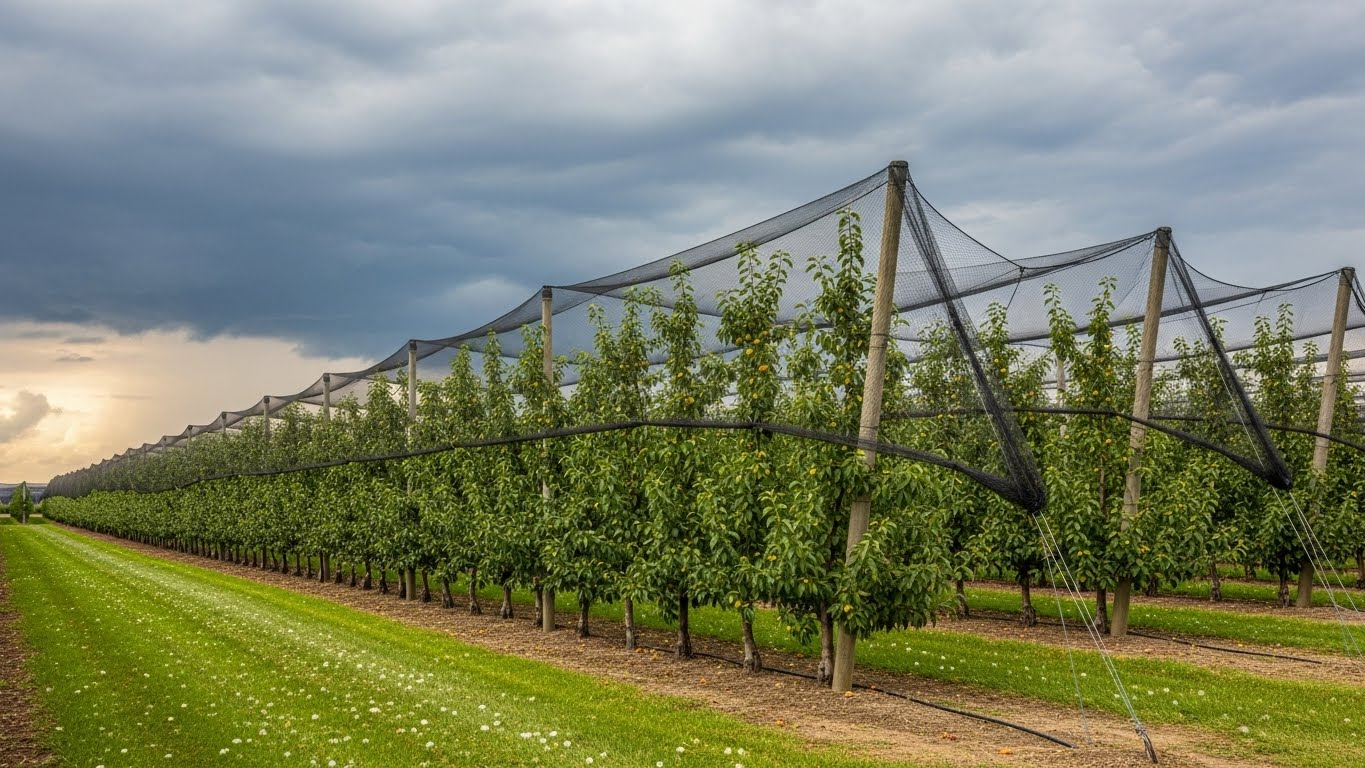
Another important component of anti-hail systems is the supporting construction. The net alone cannot provide full protection; a poorly installed system may deform even under light winds. For this reason, pole height, wire tension, anchoring design, and the durability of connection equipment must be accurately determined. One of the reasons Reba systems are preferred is their engineering solutions based on field analysis. Nets that are tensioned at the correct angle provide protection not only against hail but also against wind and bird damage.
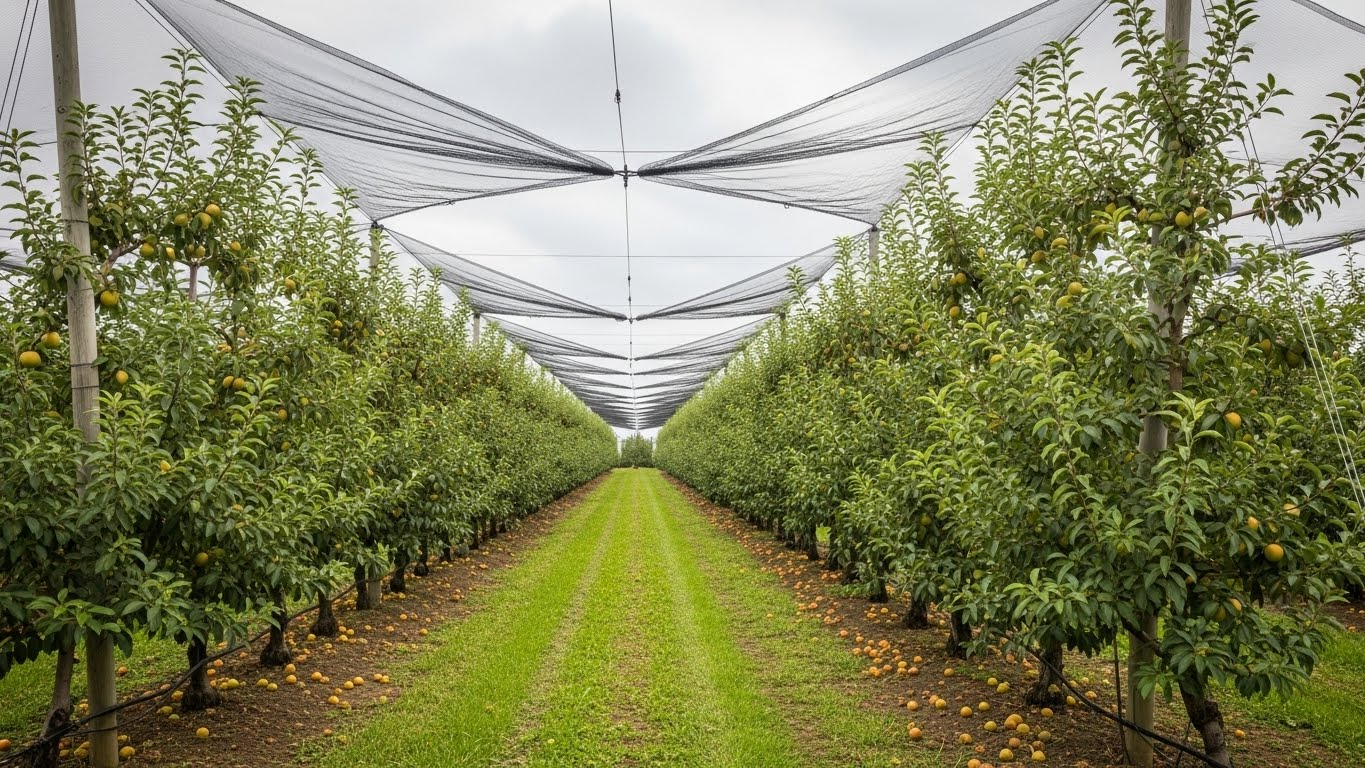
The agricultural benefits of anti-hail systems are not limited to hail protection. Nets provide slight shading, which reduces plant stress during heatwaves. They also help maintain humidity balance by creating a more stable microclimate within the orchard. This effect plays an important role in the healthy growth of young saplings. Additionally, nets reduce wind speed, minimizing branch breakage and fruit drop. They also significantly reduce bird damage.
In conclusion, anti-hail systems are an indispensable part of modern agriculture. Whether maintaining fruit quality, increasing efficiency, or ensuring long-term economic sustainability, these systems provide significant advantages to growers. Reba Anti-Hail solutions are among the most reliable in the industry due to their high-quality nets and engineering-focused design.