
A comprehensive guide explaining the damage hailstorms cause to agricultural production, their economic impact, and how producers can protect themselves.
Dole storms are among the meteorological events that cause the greatest economic losses in the agricultural sector. Especially in fruit production, viticulture, and other high value-added agricultural crops, hail can cause a significant portion of the annual income to disappear in a single event. Most producers evaluate hail damage only based on visible destruction; however, the true economic burden of hail is much broader. In addition to crop loss, reduced yield, quality deterioration, structural damage to trees, increased plant stress, extra maintenance costs, weakened long-term commercial relationships, and reduced export capacity are also part of these losses. In modern orcharding, where producers must maintain consistent quality and annual production standards, hail is not just a natural disaster but a risk factor affecting all investment plans.
A single severe hailstorm can cause an average loss of $8,000 to $20,000 per hectare. This figure represents only the direct fruit damage. Wounds formed on the tree take time to heal, causing the plant to lose energy in the process. The tree may produce fewer blossoms the following year, shoot development may slow, and fruit-setting rates may decline. Therefore, hail affects not only the current season but the overall production performance for at least 2–3 years. Surface blemishes and deformities reduce fruits to second quality, which is a significant income loss especially for exporters. Export markets place high importance on fruit surface quality, particularly for apples, cherries, and grapes. After hail, producers must reclassify products, calibrate them, and increase the volume of marketable fruits, which requires additional labor.
Maintenance expenses are another invisible economic burden of hail damage. The risk of fungal diseases increases on branches injured by hail. Producers must perform protective spraying. Additionally, broken branches need pruning, orchards require cleaning, and new shoots must be supported. All these maintenance processes increase the overall cost of hail damage by 20–30%. For producers, the most destructive aspect is the physical and physiological stress in the orchard, which negatively affects the overall development of the trees.
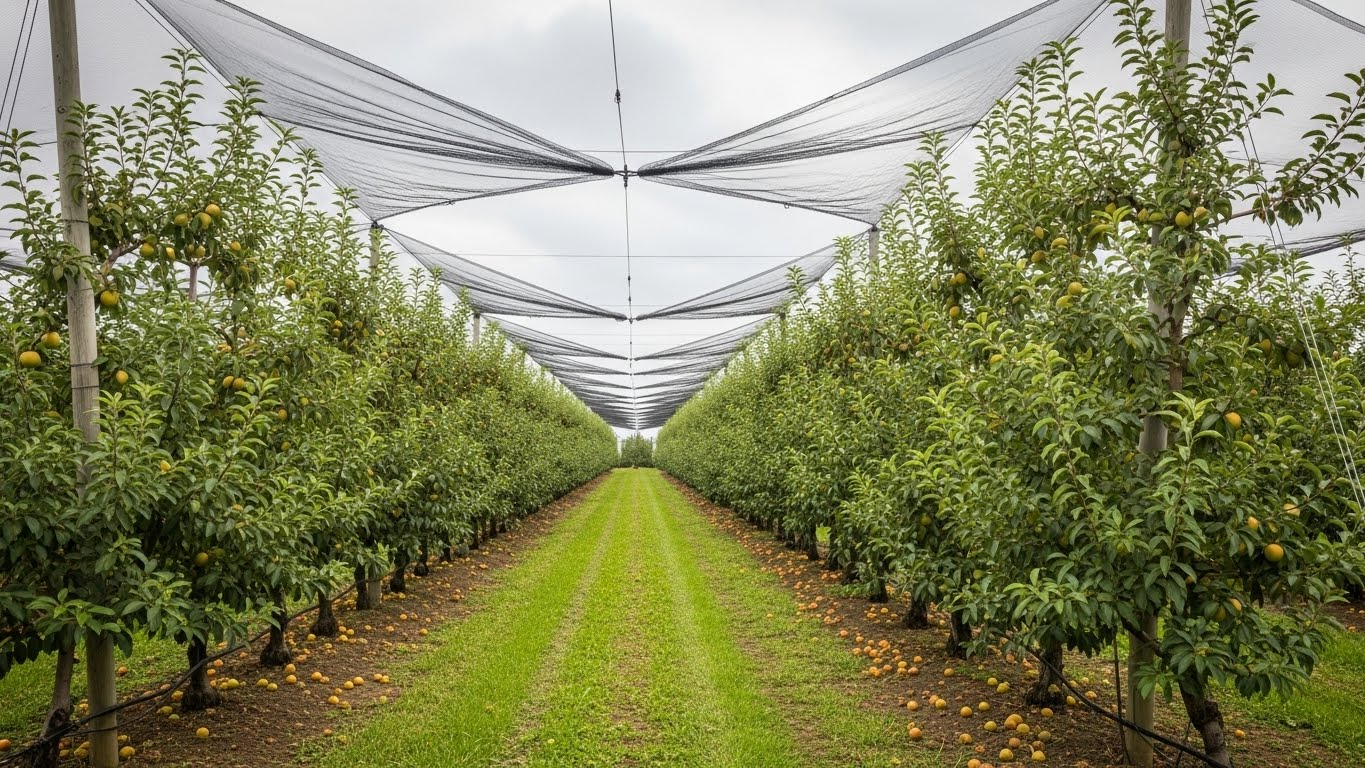
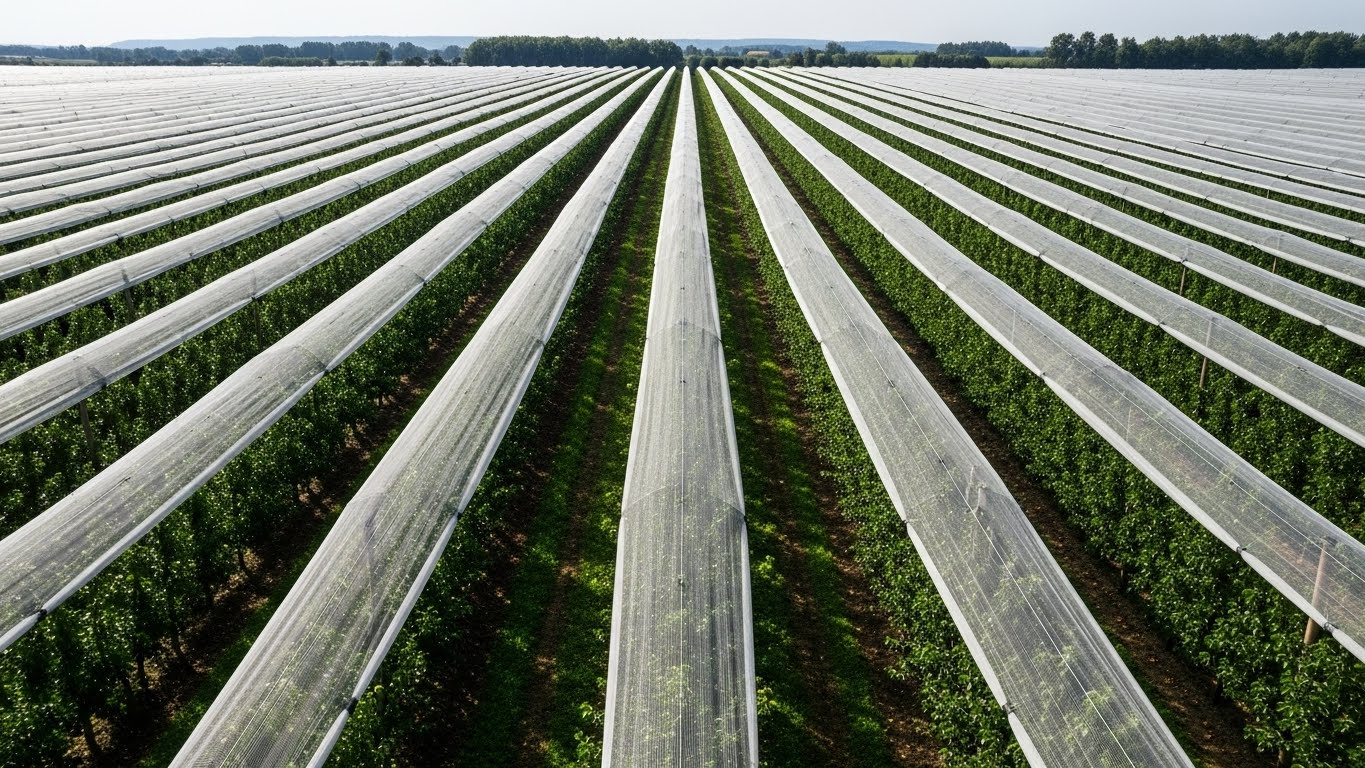
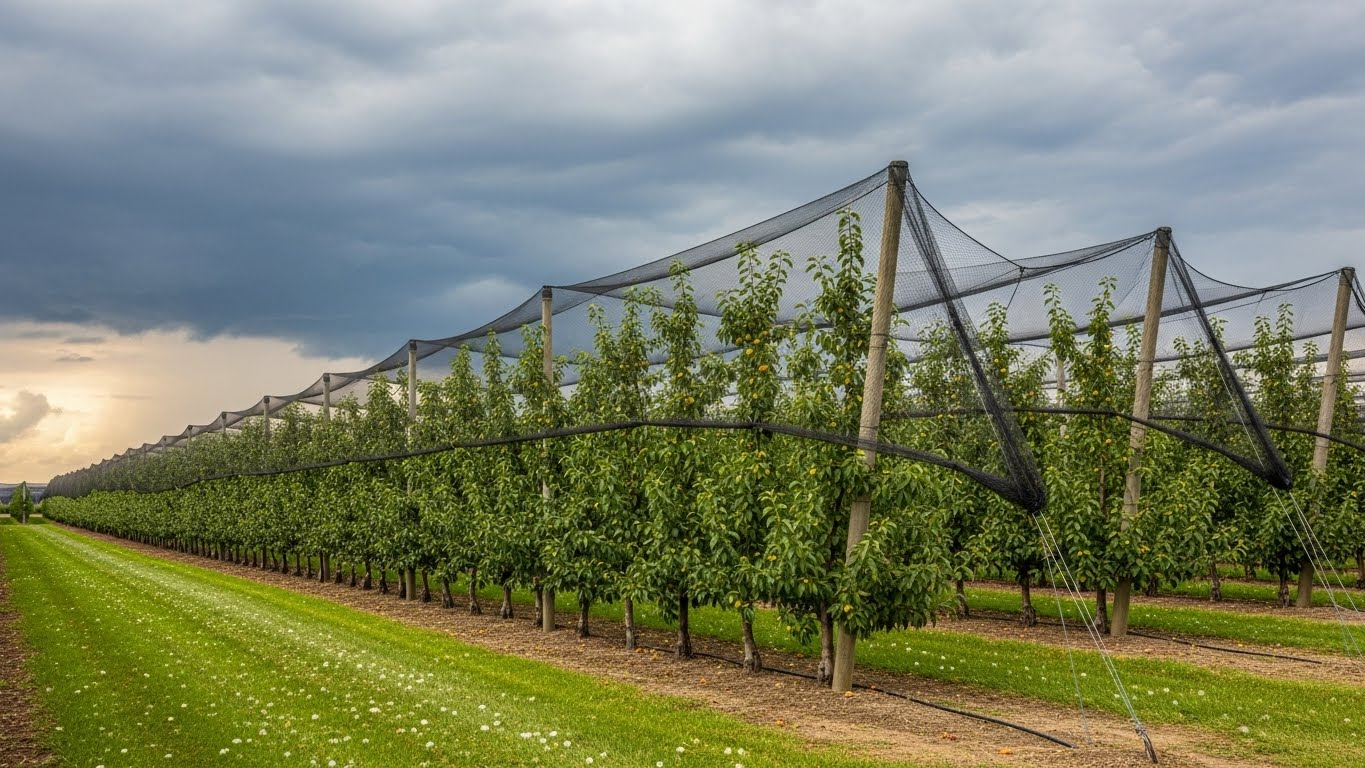
At this point, professional protection systems come into play. Anti-hail nets have long been the most effective hail prevention method in agriculture. These nets are designed to absorb the kinetic energy of hailstones. The special HDPE fibers used in Reba Anti-Hail systems provide long-lasting durability thanks to UV stabilization. When a hailstone hits the net, it gently stretches, dispersing the energy over a wide surface and preventing it from reaching the plant. As a result, fruit surfaces, leaves, and young shoots are protected from impact. This preserves product quality, secures yield, and ensures income stability for the producer.
However, proper net selection and professional installation are just as important as the net quality itself. The support structure must comply with engineering standards, be strong enough to withstand lateral wind loads, and use the correct connection components. Producers who focus solely on price may experience issues such as wear on the net, breakage in connections, or system collapse within a few years. Therefore, Reba systems are preferred not only for net quality but also for engineering design that is adapted to field conditions.
In conclusion, hail is not just a weather event but a risk factor that threatens economic sustainability in agriculture. The most effective method of combating this risk is modern anti-hail systems. Protecting the future of the producer begins with protecting the orchard. Considering the increasing intensity of hailstorms, protection systems are no longer a choice—they are a necessity.